
When I received my ADHD diagnosis, I thought I was ready for it. I had spent so long researching, questioning myself, wondering whether I really met the criteria, that I assumed the moment itself would feel simple.
A yes or a no.
A switch being flipped.
A moment of clarity.
Of course, it wasn’t like that. It rarely is.
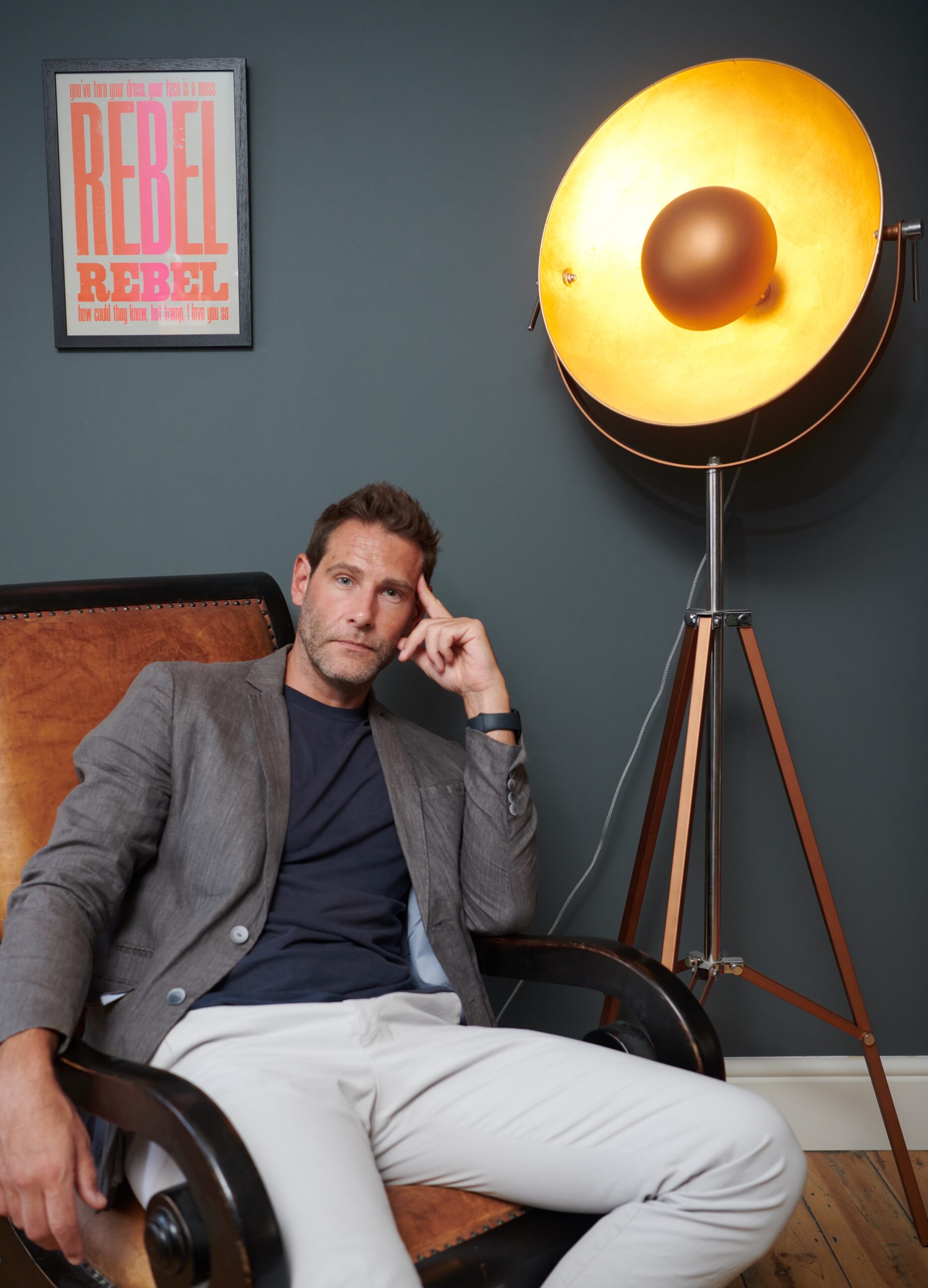
In my last blog in this series, I wrote about the process of being assessed and what actually happens on the clinician side of the desk. But after that blog was finished, all I could think about was what happened to me after I got my diagnosis. The days and weeks where the diagnosis had stopped being a hypothetical idea and had become tangible, something real that you carry inside your chest.
And the questions that follow are not always the ones you expect.
What does this mean for who I am? Am I still me? Am I different now?
What do I do with this information?
How do I start to make sense of the life I have already lived?
To explore this properly, I went back to clinical psychologist Dr Fleur-Michelle Coiffait. I wanted to know how clinicians think about that moment, how they support people who are stepping into a new self-understanding, and what helps people navigate those first confusing days.
As ever, Fleur-Michelle proved to be an excellent conversation partner. Clearly hugely informed, but also deeply passionate about the subject.
Talking to her felt like turning the diagnosis around in my hands, seeing its shape more clearly from the angles I missed when I was standing on the other side of the room.
One thing Fleur-Michelle said early on stayed with me. “People often think the diagnosis will land in a clean, controlled way,” she told me, “but feelings have their own timeline.”
She sees it all: relief, grief, anger, confusion, hope, even a sort of emotional jet lag. Some people cry as soon as they hear the words. Others feel nothing for a while, then crash into the realisation days later when something small triggers it. There is no right way to feel…
I recognised myself in that. When I got my diagnosis, the emotions came flooding over me sooner than I expected. I had thought I would be calm. Rational. Instead, it felt like a wave breaking over my head. It was not dramatic or loud, just…persistently there. A quiet emotional recognition of something I had felt all my life but never had the language for.
Before diagnosis, I had been treated for depression and anxiety for years. Some treatments had helped a little and some not, but neither diagnosis ever touched the core of what I felt was wrong. I always felt like I was trying to play life on hard mode. It wasn’t just stress or low mood. It was something deeper. A friction between who I felt I was and what life seemed to expect of me.
Receiving the diagnosis didn’t magically resolve that tension, but it explained it. It placed it in context. It was the start of understanding myself, perhaps properly for the first time.
The feedback session is where diagnosis becomes real. The clinician explains how they reached their conclusion, how the pieces fit together, and then hands you the report. That report can feel heavier than you think. Reading your traits, habits, struggles and patterns mapped out in clinical language can be unsettling, even if it is accurate. It can feel like holding a mirror you have avoided for years.
I remember reading mine and feeling a strange mix of recognition and discomfort. It was validating, but also sharp around the edges. Seeing yourself described in black and white can feel like evidence of something you should have noticed earlier. Or evidence of something you fear makes you different.
Fleur-Michelle understands this reaction. “The report is meant to be a tool,” she told me. “It is not a judgement and not a summary of your worth. But because it touches so many parts of who you are, people often experience it in a much more emotional way than they expect.”
She explained that clinicians look for coherence. That is the real craft of diagnosis. Not just the presence of symptoms, but the way the story hangs together. The patterns across childhood, school, relationships, work, emotional responses. The context around the facts.
“It is about seeing the person,” she said. “Not just the criteria.”
And this was important for me to hear, because one of my earliest fears had been that I might not be ADHD enough. I could function. I could hold down jobs. I could appear capable. But underneath, it always felt like I was dragging an anchor along the ground while everyone else jogged beside me effortlessly.
Diagnosis did not create that feeling. It simply named it.
Something else that came up in our conversation was the idea of giving yourself time. ADHDers are often so used to sprinting at life, reacting quickly, making decisions instantly, that we forget we are allowed to pause.
One of the things I now tell anyone going through a diagnosis is this: give yourself a window before you start explaining it to others. Give yourself space to work out how you feel, rather than letting the news be shaped by someone else’s reaction.
The diagnosis is personal. It affects your identity. It shifts how you view your past. It may change how you choose to live your future. That deserves space.
And the feelings can be contradictory. You might feel relief and loss at the same time. You might feel joy at the clarity and grief for the years you spent without it. You might replay past decisions or moments and see them in a new light.
For many late-diagnosed adults, there is a period of mourning. I felt it too. Grieving for the life I imagined I could have lived if I had understood myself earlier. Mourning the mistakes that were not really mistakes, but symptoms I did not recognise. Mourning the years spent feeling like everyone else had been handed a manual I never received.
But in time, something else rose to the surface.
I began to notice the positive traits that ADHD had given me. The creativity. The humour. The ability to make unexpected connections. The way my brain could jump sideways and find ideas that felt fresh and alive. Those traits had always been there. They just got buried under the weight of shame, people pleasing and self-criticism.
Diagnosis didn’t make me lose the difficult parts. It simply let me see the full picture.
And that full picture includes challenges AND strengths.
Another part of the conversation that feels essential to include here is medication. It is often the next question people have once the diagnosis is confirmed. Should I try medication? Will it help? Will it change me?
Two people recently told me they were worried medication would turn them into zombies or make them feel like someone else. These fears are common, and understandable. Medication is not a small decision.
So I asked Fleur-Michelle how clinicians frame this conversation in early treatment.
She explained that medication is not designed to alter personality. It is not about muting your spark or making you compliant. It is about supporting parts of the brain that struggle with activation, initiation or consistency. It is one tool, not the entire treatment plan.
“Medication can be transformational for some people,” she said, “and helpful but subtle for others. And for some, it might not be the right choice. The point is that it is personal. It should be a collaboration, not a prescription handed down without discussion.”
What mattered to me during titration was understanding the process. I did not respond well to one medication, and that was unsettling at first. My resting heart rate spiked, my blood pressure rose, and I felt out of balance. But when I switched, things shifted. It felt calmer, clearer, steadier. It helped me with action and initiation, which were the things I struggled with most.
But medication was not a magic fix. It did not handle emotional regulation or rejection sensitivity by itself. I had to meet the medication halfway. I had to build routines, use strategies, learn what supported me, and pay attention to the signals my brain and body were giving me.
Medication is a tool. It is not the whole solution.
There is no single right pathway and no single right outcome. What matters is that people have the information they need to make an informed choice. A choice that feels aligned with their life, their values and their wellbeing.
In the weeks after diagnosis, something subtle begins to happen. The initial emotional intensity softens. You start noticing patterns with more kindness. You start seeing your past with more compassion. You start spotting moments where ADHD shaped your reactions, not because you were flawed but because your brain was trying to keep up in the only way it knew how.
The shame begins to lift. Not quickly, and not all at once, but gradually.
You also begin to build a new understanding of yourself. For many of us, that includes revisiting the stories we have lived with for years. The stories about being lazy, careless, too sensitive, too reactive, too much or not enough. Diagnosis does not erase those stories, but it offers a new interpretation.
A factual one.
A kinder one.
A more accurate one.
And that is where the real work begins.
Because after the diagnosis comes the understanding. And after the understanding comes the choice. The choice to live differently. To ask for help sooner. To set boundaries. To design your environment to suit your brain instead of punishing yourself for not fitting a mould that was never built for you.
This is what Fleur-Michelle meant when she said diagnosis is only one route to clarity. It is not the final destination. It is the doorway you step through on your way to a life that makes more sense.
So what happens after the diagnosis?
You start again.
Not in a dramatic, overnight-shift kind of way, but in a grounded, quiet way. You begin by giving yourself time. You begin by observing yourself without judgement. You begin by taking small steps that align with who you now know yourself to be.
You begin by accepting that this explanation is not an excuse and not a burden. It is a context. A framework. A language.
And within that language, there is space to rewrite the story.
Not to erase the past, but to understand it.
Not to become someone else, but to become yourself with fewer barriers.
The frameworks matter, but the empathy matters more. Both from clinicians and from yourself.
Getting a diagnosis later in life can be a lot of things. Emotional. Devastating. Impactful. Meaningful. But If I could give anyone reading this a singular piece of advice it would be this: Be kind to yourself. Spend some time working out what this means for you – because it could mean the start of a new chapter in your life and you owe it to yourself to begin that chapter with a clear head, a kind heart and an open mind.