
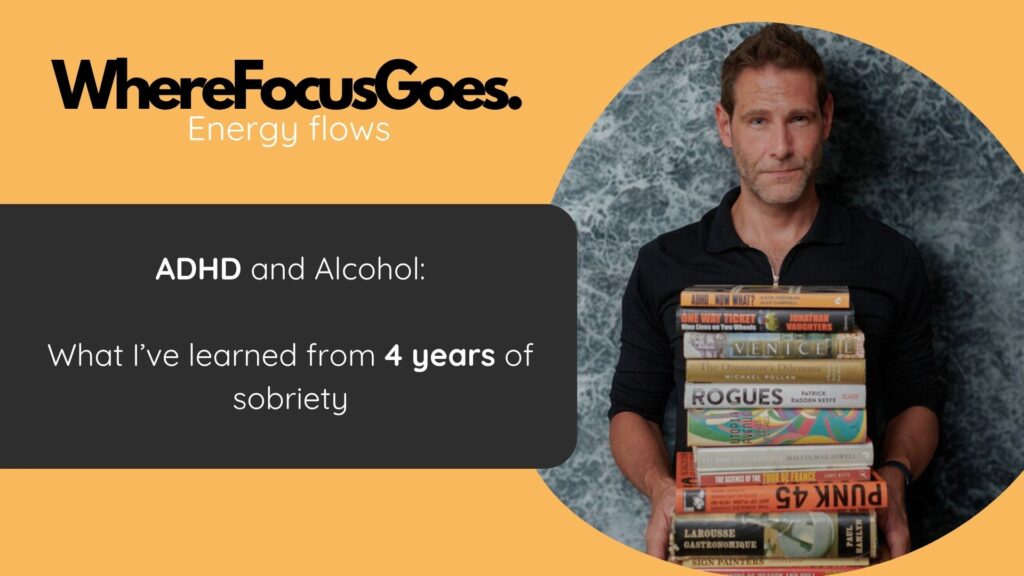
Last Monday, I celebrated four years since my last drink. And that’s really significant for me, for a number of reasons. Firstly because I definitely wasn’t a ‘good’ drinker – if there is such a thing – but I wasn’t a ‘bad drinker’ either. But I was certainly a problem drinker.
It’s worth noting that I was almost always a happy drinker. And looking back, to when I first started drinking – which was probably fairly late for the average English teenager, I was using drinking as a way of fitting in. A gangly, awkward and catastrophically average child, I struggled to understand why people weren’t endlessly fascinated by my encyclopaedic knowledge of Douglas Adams’ The Hitchhikers Guide to the Galaxy series. Why they didn’t find my ability to quote lines from niche american punk bands endearing. Why I was constantly feeling like I was some sort of alien child placed into a foster family as part of some interstellar Truman Show-style prank.
So when I actually tried alcohol properly at one of the parties that – by some administrative cock up on the part of the host – I was actually invited to, and found that it made me relax, seem interesting to the opposite sex and quiet the part of my brain which had been shouting obscene put downs at my since puberty… I was hooked.
Hooked, but not in a dependent way – just hooked in a way that even applying a small amount seemed to make everything and every situation: better.
And so I drank. And because I’m quite a large person, I drank a lot primarily because I could. Year after year, party after party. Living in London and having a great time of things because that’s what everyone else was doing. Going out and living our best lives and putting the children of several East London pub owners through university with our spending.
And then one day you wake up in your 30s with a terrible hangover for probably the third time that week and wonder just what the hell happened the night before to have caused such an incredible amount of suffering. Before remembering there was no special occasion. No birthday, or promotion party. It was Tuesday and you had two episodes of Game of Thrones to watch so you drank two bottles of wine, nearly on your own. Before cracking a bottle of whisky for a ‘night cap’ and stumbling to bed at 2 in the morning.
And I was sick of it. Sick of myself being completely unable to change my ways. As I’ve said before, I never have classed myself as an alcoholic (reader: your mileage on this matter may vary) but I will freely admit that I did have a problem.
So, when I received my ADHD diagnosis and started reading about the connection between ADHD and substance missuse… Things clicked for me. I saw myself properly for the first time.
I realised why I had such problems with moderation. Once I started drinking, I couldn’t stop. I’d tell people ‘If I stop drinking too early before going to sleep, I get terrible headaches’ – but the truth was I just wanted to carry on drinking because of the way it made me feel: A person who liked themself. A person who enjoyed life.
So – what to do with that knowledge. I’ve talked about this before, but I’d met my first ‘Reason or Excuse’ moment. I could either carry on doing what I’d been doing, telling myself my excuse was my ADHD and I couldn’t change OR I could use it as my reasonfor changing.
So I did. I stopped. One day, I decided to stop and haven’t looked back. But that was the right call for me – I’m not a doctor and I’m not telling you what to do. If you are an ADHD with serious and ongoing substance dependence issues, stopping cold turkey could kill you. Speak to a healthcare professional. But, do understand that there is something inherent in your ADHD that might be responsible for your addictions. And knowledge can be the start of change. So here’s some things it might be useful to know:
The Numbers You Need to Know
If you have ADHD, your relationship with substances isn’t coincidental. It’s statistically predictable.
Research shows that 21% of people seeking treatment for substance use disorders have ADHD. That’s more than one in five. (MDPIPubMed)
Half of adults with ADHD have had a substance use disorder at some point in their lives. And even after controlling for mental illness and childhood adversity, young adults with ADHD are still 69% more likely to develop a substance use disorder than their peers without ADHD. (UtorontoUtoronto)
This isn’t a personal failing. This is neurology.
The same dopamine dysregulation that makes your ADHD brain struggle with focus, motivation, and emotional regulation makes it vulnerable to substances that artificially spike dopamine. Alcohol, cocaine, cannabis. They all hit the reward system that’s already running on empty.
And although this wasn’t the case for me, ADHD is associated with early onset and more severe substance use disorders. When we start using, we tend to start younger. When we develop problems, they tend to escalate faster. (MDPI)
So if you’ve ever felt like everyone else could “just have a few drinks” while you couldn’t seem to stop once you started, you’re not weak. Your brain is wired differently.
Why ADHD Makes Sobriety Harder (And What Actually Helps)
Here’s what I’ve learned in four years: getting sober with ADHD isn’t just about stopping drinking. It’s about managing the brain that was using alcohol to self-medicate in the first place.
1. Treat the ADHD
Research shows that when ADHD is properly treated, it can actually reduce the likelihood of relapse and improve treatment engagement. (Openroadpsych)
For me, starting medication was a big factor in being able to stop, but it doesn’t have to be stimulants. Non-stimulant medications like atomoxetine and guanfacine don’t carry the same misuse risks and can still effectively manage ADHD symptoms. (DrugFree.org)
But we should also talk about the non-pharmaceutical treatments – therapy, coaching, and UNDERSTANDING your ADHD – which can have a significant impact on how you manage your coping strategies.
The key is this: untreated ADHD makes sobriety exponentially harder. You’re trying to regulate emotions, manage impulses, and maintain routines with a brain that struggles with all of those things. That’s not sustainable. Get support for your ADHD, and sobriety can become more likely, and more sustainable.
2. Build a Structure That Works With Your Brain
One of the most useful frameworks I’ve encountered is H.A.L.T. It’s an acronym that helps you prevent relapse by addressing the conditions that make you vulnerable:
H– Don’t get too Hungry
A– Don’t get too Angry
L– Don’t get too Lonely
T – Don’t get too Tired
Adopting a sobriety-promoting lifestyle means eating three full meals with healthy snacks, limiting sugar and caffeine, and avoiding becoming too hungry, angry, lonely, or tired. (ADDitude)
For ADHD brains, this isn’t optional. Blood sugar crashes, sleep deprivation, and emotional dysregulation are relapse triggers. Structure protects sobriety.
3. Use Therapy That Targets Both
Cognitive Behavioural Therapy (CBT) helps individuals recognise and change negative thought patterns that contribute to impulsive behaviours and substance use. Dialectical Behaviour Therapy (DBT) focuses on emotional regulation and distress tolerance, helping individuals manage ADHD-related frustration without turning to substances. (WoodhavenohioWoodhavenohio)
Both are evidence-based. Both work. The trick is finding a therapist who understands the intersection of ADHD and addiction, because treating one without the other rarely sticks.
4. Tell people your ‘Why’
When I stopped drinking, I told friends, family and co-workers what I was doing and why. And not one single person questioned me, or said ‘go on, one drink won’t hurt’, or told me it was doomed to fail. Not. A single. Person.
And I’m really grateful for their support, but because I’d framed it as ‘I’m doing this thing, here are my reasons’, and not ‘I’m trying to do this thing and I’m worried about failing’, I was also able to reframe it in my own mind that this was just my new reality. And it worked.
What I’d Tell My Younger Self
If I could go back four years (or ten, or twenty), here’s what I’d say:
You’re not broken. Your brain works differently. That’s not a flaw. It’s a fact. And it requires different strategies.
Sobriety isn’t willpower. It’s structure, support, and accepting and treating the underlying condition that made substances feel necessary in the first place.
You don’t have to do this alone. In fact, you can’t. Recovery happens in community. Find yours.
It gets easier. Not every day. But over time, the urges fade. The coping mechanisms stick. The life you build without substances becomes the life you want to protect.
Four years ago, I didn’t believe any of that. Today, I know it’s true.
If you’re reading this and struggling with substances, or if you’re sober but white-knuckling your way through it, please hear this: you deserve support. You deserve treatment. You deserve a life where sobriety isn’t a daily battle.
ADHD and addiction are deeply connected. But recovery is possible. And you don’t have to figure it out alone.