
Trusting yourself with ADHD
Recently, I was sent to court.
I was actually being prosecuted.
And the lead prosecutor was this really charismatic sort, a born story teller – the sort that engages you from the off and instantly hooks you into their way of thinking. He was actually delivering a pretty devastating assessment of my entire character and morals. Recounting moments from my past in wince-inducing detail, and connecting story threads from decades of friendships, relationships and jobs before weaving them together with such surety that the listener could have no doubt whatsoever about the kind of repugnant, lazy, feckless moron he was talking about. Me.
It was done so well that even I had to agree with him. After all, why wouldn’t I?
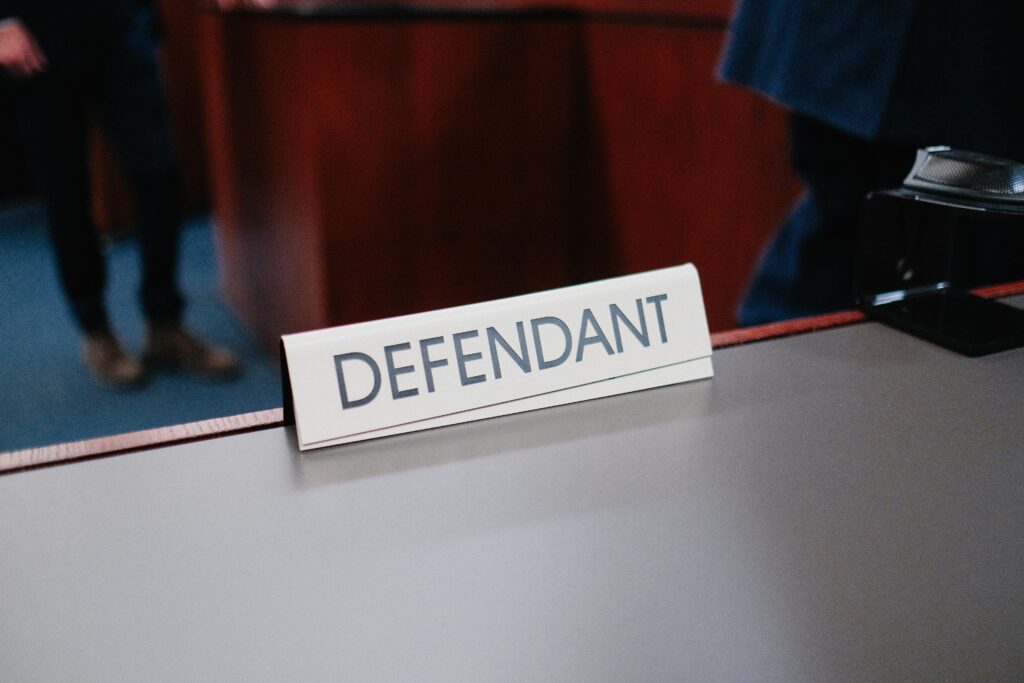
Except this court wasn’t real. It existed only inside my own head. The prosecutor (also me) was so effective because he had over 40 years of experience. Decades of being that voice inside that celebrates your failures and admonishes you for daring to believe in a different outcome.
And it’s a court that I find myself hauled into quite often. Each time I struggle to get the things done that I know I need to. Each time I need to trust myself, I find myself back again – watching a ‘greatest hits’ compilation of every single time I’ve tried and failed. Or even failed to try.
And it’s a common theme with my clients too – how can we as ADHDers trust ourselves more? Well it starts with knowing WHY we struggle to trust ourselves in the first place – and why that court room we find ourselves in is just smoke – lies we tell ourselves, because even in misery, there’s comfort.
Trust isn’t something that comes naturally for ADHDers. It isn’t something that we can just call up. Because trust is built on the accumulation of recognising when things go RIGHT – something we just don’t do.
We focus on when things go WRONG, when we CAN’T, when things stop working… and we remember that feeling. Over and over. So when we try to act on our intentions and get stuck – or hit an executive function barrier – it’s another thread in the narrative that we shouldn’t trust ourselves. Each disappointment in ourselves is more evidence for the prosecution.
So what can we do about it?
First, we need to throw out the charge sheet. Because the case against you was built on bad evidence.
That cycle you know so well, where you set an intention, you hit a wall, you don’t follow through, and you file it away as proof you’re unreliable, isn’t a verdict on your character. It’s a description of how an ADHD brain works under a system that wasn’t built for it. The research is clear: this isn’t laziness or weak willpower. It’s a brain wired differently from the expectations set around it.
Three things are happening in that courtroom that have nothing to do with who you are.
🟠 Your brain works on a NOW or NOT NOW timeline. The future version of you that benefits from doing the boring thing today doesn’t feel real enough to win the argument against the version that wants relief right now. It’s not a character flaw – it’s just a difference in brain wiring.
🟠 Your emotional memories land harder. When you break a promise to yourself, it doesn’t land as “oops, try tomorrow.” It lands as something closer to devastation. So your brain, trying to protect you, quietly stops letting you make big commitments at all. Less risk of that feeling again.
🟠 And every “real or felt” failure gets logged. Carved into us like granite. There’s an idea (Ditzler’s model of the self) that I come back to often, the idea that on the top of who we really are sits a thick layer of self-doubt, built up every time we experience a failure, a mistake, or a setback. I call it adding another ‘emotional overcoat’. For us, where emotional memory amplifies every stumble, that doubt layer thickens far faster than the actual evidence justifies. We’re not running an honest court. The prosecution gets to admit feelings as facts.
So the first move isn’t to try harder. It’s to stop accepting a rigged trial.
Here’s what actually rebuilds the case for the defence.
Shrink the promise until it’s almost impossible to break. Self-trust is built on evidence that you showed up for yourself, so you have to start generating that evidence, however small. Don’t write “finish the project.” Write “open the project.” The win isn’t the size of the task; it’s the kept promise. And the more small promises you keep, the more your brain has to work with when it tries to claim you never follow through.
Collect the evidence you’re currently ignoring. You already trust yourself in dozens of tiny ways every day. You just don’t count them, because the prosecution only calls witnesses for the other side. Start banking the wins. Notice where you ARE reliable. You’re not inventing a new story; you’re admitting evidence that was always there.
Stop white-knuckling it and build the system instead. This is the one most ADHDers resist, because we think needing support is more proof of failure. It isn’t. Research on adults with ADHD shows that externalised systems, the ones that take the load off working memory and executive function, dramatically improve follow-through. That means body doubling. Accountability check-ins with someone kind (like a coach!). Visual cues sitting in your actual line of sight. Anything that shortens the distance between intention and action. You’re not cheating. You’re building a courtroom with fairer rules.
And redefine what “trustworthy” even means. Here’s the trap: we think self-trust requires perfect consistency, so the first slip throws out the whole case. It doesn’t. Trust isn’t never failing. It’s knowing you do your best, you learn from the misses, and you pull through most of the time. That’s the standard you’d hold a friend to. It’s the one you’re allowed to hold yourself to.
So much of what you’ve been taught to distrust in yourself, the racing mind, the leaps of thought, the intensity, the refusal to do things the “normal” way, isn’t the flaw in the machine. It’s the engine. The same wiring that makes follow-through hard is the wiring behind your creativity, your curiosity, your ability to see what others miss. You’ve spent decades prosecuting yourself for the very thing that makes you good at what you do.
You don’t need a harsher judge. You’ve had one for 40 years, and look where it got you.
You need better evidence. And the good news is, you get to start gathering it today, one small, kept promise at a time.